

Working Hours with Liam Collens
Get to know more about fellow freelancers' routines in this Desert Prose series

It’s been a while since I’ve done one of these, but I’d love to do more going forward. If you’re interested in being featured, please hit me up!
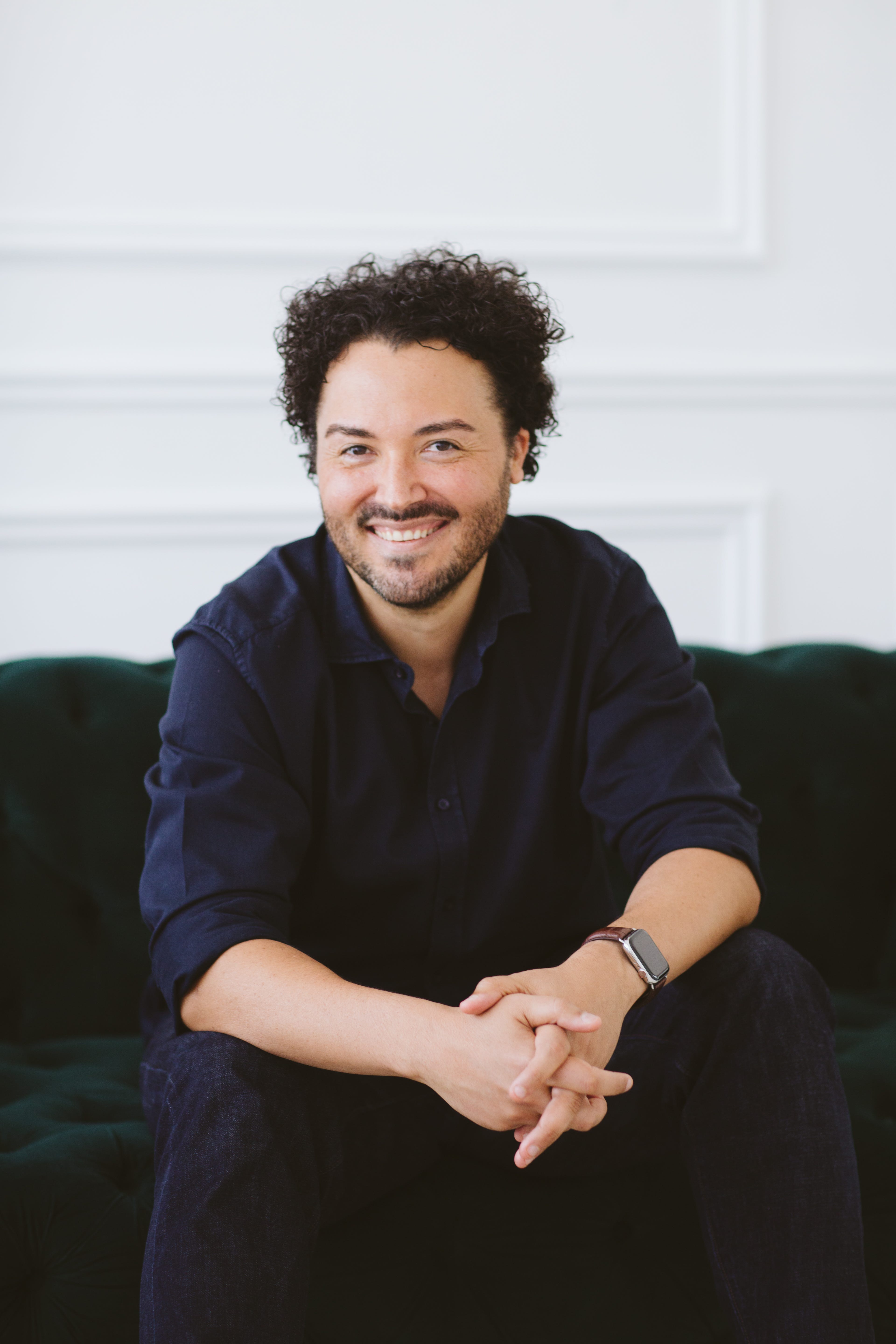
Now, I did this interview a while ago, but what better week to feature Dubai-based foodie reviewer and writer Liam Collens than the one in which his amazing book, The Rise of Indian Food: Recipes Reimagined by Trèsind Studio, written with chef Himanshu Saini, has come out? It’s a collection of Indian recipes from the acclaimed chef behind Trèsind Studio – the first-ever Indian restaurant to earn three Michelin stars - and a hugely exciting project to have worked on (which he also did alongside Courtney Brandt).
While Liam is not full-time freelance, he does a fair bit of freelance work, including keeping up with his own eponymous Substack newsletter, in his spare time. So, here, he shares his personal work routines and views of his rather beautiful desk.
Enjoy!
Where do you most enjoy working from – and why?
I like being alone in a busy space, preferably somewhere with atmosphere, a Wi-Fi connection as strong as the cold brew and a ready supply of things to nibble on with headphones firmly in place. I listen to a lot of old school R&B on YouTube to get me into a good headspace. (Shout out to Sunday Cleaning Sessions!) If all else fails, a tropical beach and a drink will suffice.
What does a typical workday look like for you – or does it shift often?
I have a very full-time job as General Counsel for a well-known cosmetics company. Around that job – plus the family and parenting duties – I spend my evenings and weekends writing or going to places to write about.
Do you use any tools, techniques or rituals to help structure your day?
How much time do you have?! It is rare that I have time to write start-to-finish in one sitting and, actually, it does not lead to better results for me. So I am constantly trying new things that help maximise my ability to research, write and give myself some distance from drafts before hitting publish. This typically means that I have notes and thoughts in different places and I will bring those thoughts together when distilling a final draft.
For a while now, I have been a big fan of voice notes. I typically dictate my thoughts about a restaurant or hotel into voice memos. It helps me to work through ideas, even if I do look like a nutter talking to myself in the car or inside a café. It also means I can drop myself several voice memos as things come to mind over time. Apple Voice Memos produce a transcript. I copy and paste the transcript into a word processor to form the first rough draft.
I also take notes on my phone inside of a restaurant, hotel or an event, especially to capture the details or observations in the moment. I did this at the last MENA 50 Best Awards to keep a tally in the moment.
I am a visual person, so photos really help me to remember details, dishes, presentation, menus, wine lists, labels, design features – the list goes on!
Separately, I also keep a collection of one-liners or metaphors to use when the occasion arises. I will draw on this list from time to time!
With all of these different sources, I need to bring everything together so, recently, I’ve started going back to good, old-fashioned pencil and Moleskine notepads to sketch out the structure, flow and key points. There is something very grounding about the mechanical act of writing by hand. I spend so much of my time looking at a screen – whether it is a monitor, an iPad or a phone – that, recently, I found the mechanical process of getting away from a word processor oddly refreshing!
I am a terrible self-editor so, if the time allows, I need time and distance away from a subject matter in order to come back to it objectively. People (like me) can become enamored with their own prose. I read things I wrote years ago and I shake my head. I can see that a point is half-baked or not nearly as important/clever as I thought it was at the time. Time can be a luxury, but a few days really helps to put some constructive distance between me and the material.
Grammarly is great, but not always reliable.
Let’s talk about ChatGPT. This may be sacrilege to some, but I use large language models (LLMs) to proofread where I want to avoid irritating an editor, or especially in the absence of one. Honestly, I have learned so much more about self-editing from a book publisher and LLMs in the last two years than in the previous eight.
Lastly, when it comes to reviews especially, I do my best to avoid other reviews about the same place if I think I am going to write about it. This is important for me personally.
Can you describe your desk at home? What does it say about how you work?
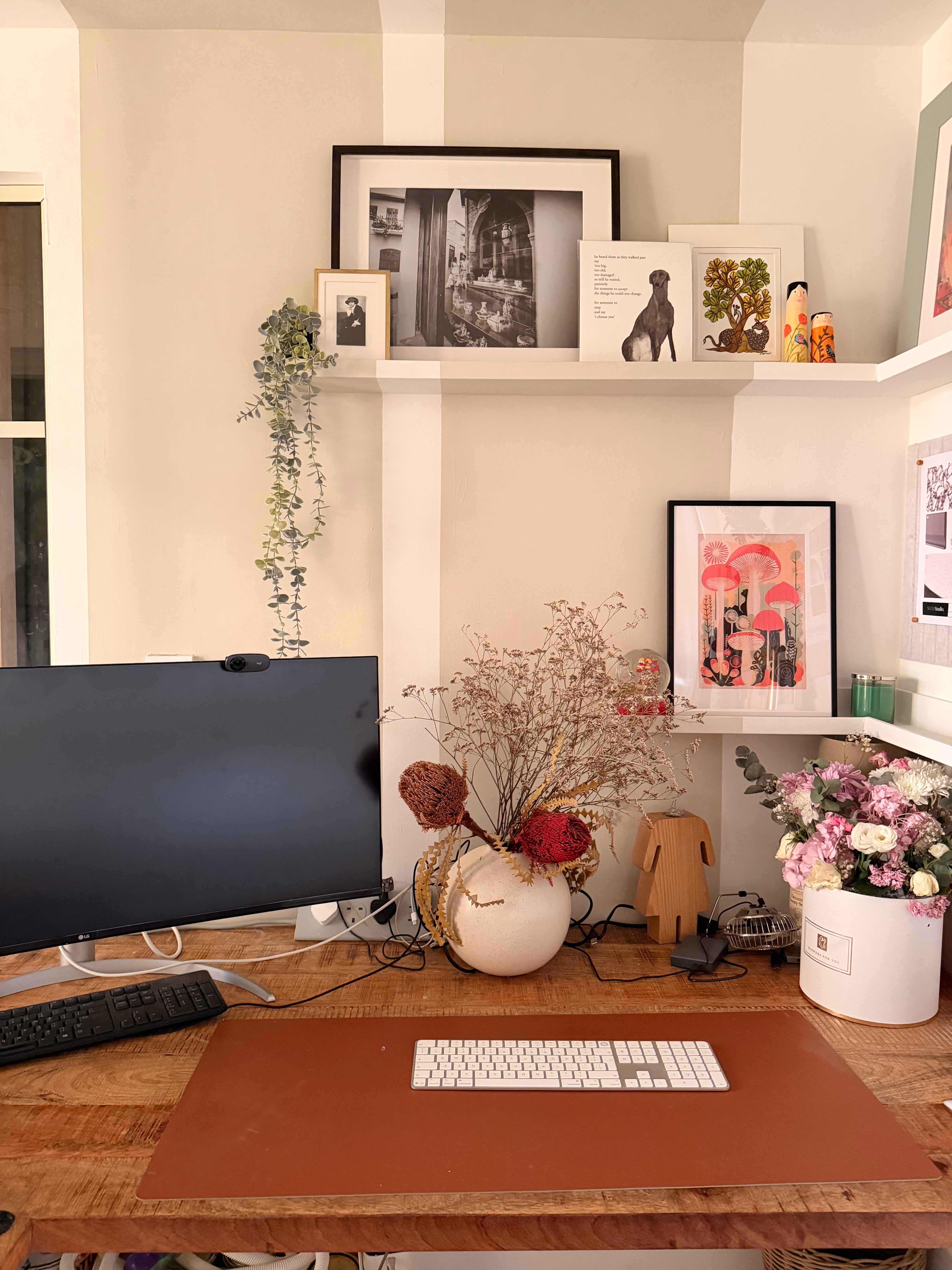
I am a big believer in “clean desk, clean mind”. We recently moved our home office to a cosy nook upstairs with a large mango-wood desk from Art and Craft Furniture in Al Quoz – highly recommended. My MacBook is tucked under a widescreen monitor. Wireless mouse and wireless keyboard means less clutter. A small desk lamp provides some soft lighting. A lap cat is optional, but desirable.
What is the hardest part of working from home, in your experience?
Focus, and being left alone. I have three cats, a dog, a two-year-old, a partner, two fridges and a pantry. For this reason, I prefer to work away from home, which leads us to…
Do you ever work from cafés, libraries, or co-working spaces? If so, what draws you to them?
Cafes and restaurants are staple writing places for me. Some favourites include Lila Molino in Alserkal Avenue and my beloved 21grams in Meyan Mall. I wrote large swathes of The Rise of Indian Food: Recipes Reimagined by Trèsind Studio while sinking double macchiatos in % Arabica, Palm Jumeirah Mall!
What are three items you always keep on your desk (or nearby) while working?
My phone, pencils and notepads.
What do you do when you feel stuck or distracted? Any habits that help bring you back?
I often find the first 200 words to be the most difficult, especially if I want to approach the subject matter from a different angle. Sometimes I will idea map different options on a notepad to see which one looks the best and then hammer out the first 200 words to see if an idea has mileage. If I cannot punch out 200 words easily, abandon ship! Don’t waste your time trying to get blood from a stone, especially with deadlines. Fast fail, pivot to another idea or take a simpler, straightforward route.
What advice would you offer to someone setting up their first freelance workspace?
Find your Zen. Find somewhere that affords you the space to focus without unwanted distraction and give yourself enough creative comforts to linger in that space. Allow yourself to walk away and come back if needed.
Thank you very much for the feature Katy! I walked for an hour yesterday dictating voice memos about some recent restaurants visits here in London!
Such a lovely read!